
Employee Device Leasing vs Reimbursement vs Capitalisation in India (2026)

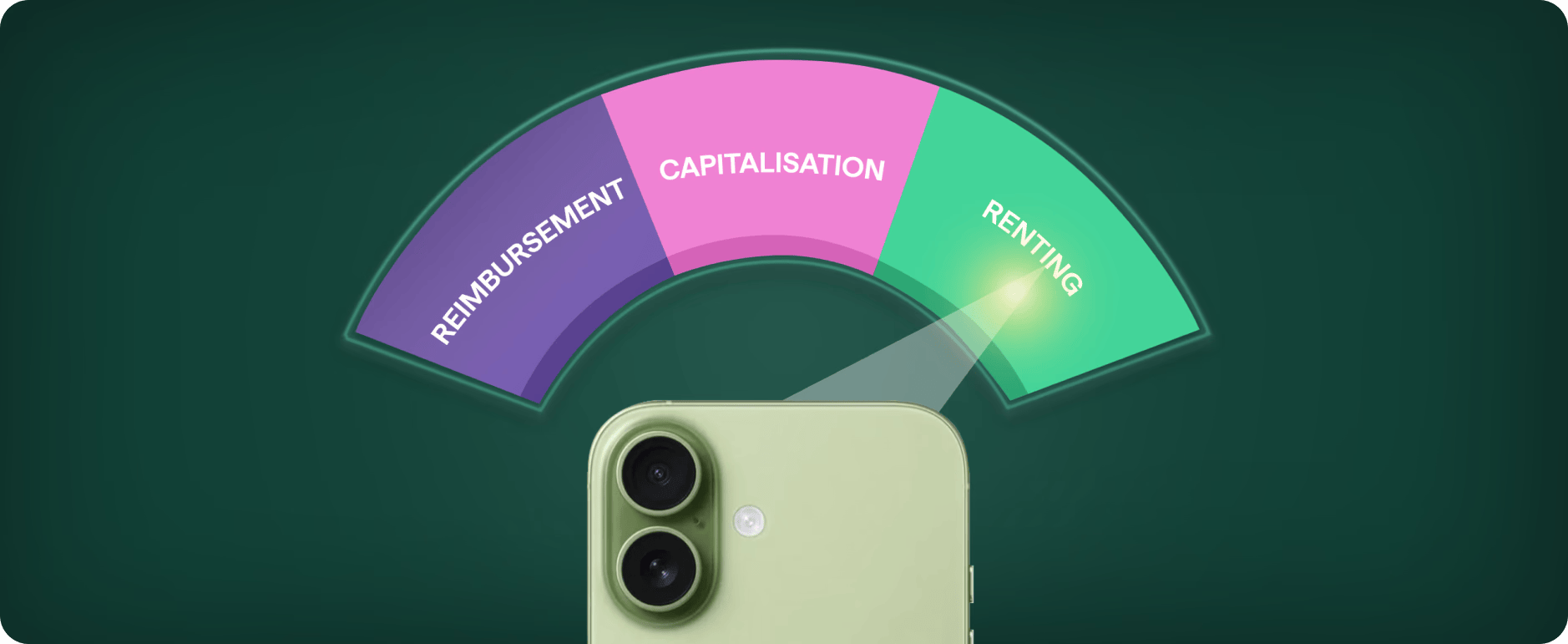
In India, companies usually handle employee mobile devices in one of three ways: reimbursement, capitalisation, or leasing. On paper, all three can look workable. In practice, they create very different outcomes for tax treatment, GST flow, accounting, employee experience, security control, and audit risk.
This guide explains how each model works for employee mobile devices in India, where the real traps sit, and when leasing becomes the more scalable structure.
If you are reviewing employee-phone policy right now, the useful question is not just which model saves money. It is which model your HR, finance, payroll, and IT teams can run cleanly at scale.
The three models at a glance
Before getting into tax and compliance, it helps to separate the models clearly.
| Model | Who owns the device during the term | Upfront cash outflow | Employee tax impact | GST treatment |
|---|---|---|---|---|
| Reimbursement | Usually unclear or mixed in practice | Usually yes | Can become messy depending on structure | Often inefficient |
| Capitalisation | Employer | Yes | Mobile facility may be fine, transfer is separate | ITC and reversal questions matter |
| Leasing / Renting | Lessor during lease term | No large upfront purchase | Can be efficient when structured properly | Monthly lease GST flow is cleaner, but structure still matters |
The surface-level difference is simple. The real difference sits in ownership chain, payroll treatment, security control, GST flow, and what happens at the end of the device life cycle.
What changed in 2025 and 2026
The mobile device decision is now more strategic than it used to be.
First, smartphones became more expensive and more premium. IDC’s India smartphone data shows rising average selling prices and strong premium-segment growth in 2025. That matters because employee device programmes increasingly sit around phones that are meaningful personal purchases, not low-value accessories.
Second, work in India is becoming more digital and mobile-led. This matters because approvals, communication, field operations, customer support, identity verification, and even payroll-linked employee experiences increasingly sit on the phone in an employee’s hand.
Third, the scale of India’s connected workforce changes the governance challenge. TRAI’s 2025 telecom data shows a mobile subscriber base above 1.17 billion. In that environment, casual reimbursement is harder to govern. Companies increasingly need a structure that supports approved devices, payroll-linked recovery, and clear lifecycle rules.
Let’s give your workforce the best benefits experience!
Over 50,000 employees are already enjoying their new devices with heavy savings. Get it for your workforce too
Model 1: Reimbursement
Reimbursement usually starts with good intent. An employee buys a phone, submits an invoice, and the company pays them back or adjusts the amount through payroll or CTC.
That can feel simple at low scale. It rarely stays simple for long.
Where reimbursement gets messy
The first problem is ownership and invoice logic. If the company wants the tax treatment of a business asset, the documentation and accounting have to support that. If the company does not treat the device correctly, the reimbursement can drift into a taxable employee benefit rather than a clean business expense.
The second problem is security and policy consistency. Different employees buy different handsets, from different sellers, on different timelines. That makes it harder to standardise approved devices, support coverage, and acceptable-use controls.
The third problem is end-of-life ambiguity. Who owns the phone after reimbursement? Is it a company asset, an employee asset, or something in between? That uncertainty is exactly where tax, perquisite, and GST questions start to stack up.
Reimbursement also creates more room for grey-market purchases, weak invoice verification, and policy exceptions. For an organisation trying to scale an employee mobile-device benefit, this is where the model usually starts breaking.
Bottom line on reimbursement
Reimbursement can work in narrow, low-scale situations. It is usually the weakest option for companies that want clean governance, consistent employee experience, standardised device policy, and less interpretation every month.
Model 2: Capitalisation
Capitalisation is the most familiar corporate model. The company buys devices directly, records them as assets, and depreciates them over time.
This structure is often more defensible than reimbursement when the phone is a strict company tool and the employer wants full ownership and control.
The important mobile-tax nuance most comparisons miss
The Income Tax Department’s guidance says that telephone or mobile facility provided by the employer is not chargeable to tax as a perquisite in the employee’s hands. That is an important distinction.
But that does not automatically make every employee-phone structure clean. The mobile facility itself and the ownership path of the handset are not the same thing. The bigger questions usually come later, when ownership is transferred, when the phone doubles as a personal benefit without the right structure, or when the documentation does not match how the company has treated the device.
What still makes capitalisation inefficient for many mobile-device programmes
Even when capitalisation is compliant, it can still be awkward for employee-choice programmes.
The company takes the upfront purchase hit. The phones sit on the balance sheet. Depreciation follows accounting and tax rules rather than benefit logic. Device retrieval, replacement, breakage, and refresh cycles become real work. End-of-term decisions can get messy, especially when employees want to keep the phone they have been using every day.
This is one reason capitalisation often works best for strict company-issued mobile fleets, but much less well for flexible employee-device benefits where employees want choice, upgrade paths, or end-of-term ownership.
Bottom line on capitalisation
Capitalisation is still reasonable when the employer wants a strict company-owned work-phone programme with tight IT and finance control. It is less attractive when the company wants a scalable, optional, employee-friendly benefit.
Model 3: Leasing or renting
Employee-device leasing changes the structure more than the handset.
In a well-run leasing model, the company works through a platform such as Tortoise that handles the heavy lifting around device sourcing, payroll-linked deductions, policy rules, insurance and care coverage, and end-of-term coordination. Ownership usually stays with the lessor during the lease period, which gives employers a cleaner operating structure without turning every phone into another balance-sheet asset.
That matters because the value of leasing is not only financing. It is execution. When the programme is set up properly, employers can connect the benefit to payroll, give employees a clearer ownership path, and in many cases structure the programme in a way that also supports GST efficiency, subject to their own tax validation.
Why leasing often fits employee mobile-device benefits better
The first advantage is flexibility. The company does not have to buy and capitalise every phone upfront.
The second is cleaner lifecycle design. Because the benefit is built around a defined lease structure, the path from ordering to payroll recovery to end-of-term handling tends to be much clearer than in reimbursement models.
The third is better alignment with how employees use phones in real life. Smartphones sit at the intersection of work and personal use much more than most traditional company assets. A mobile-device benefit works better when the structure acknowledges that instead of pretending the phone is only a back-office asset.
The fourth is operating simplicity. For many employers, this model feels closer to a managed mobility programme than a fixed-asset pool. That fits modern benefits design better than forcing every employee phone into old procurement logic.
Bottom line on leasing
For companies that want optional employee choice, cleaner operating expense treatment, lower asset-management burden, and a more modern mobile-device benefit structure, leasing is often the most practical model.
When each model actually works
A good comparison should not pretend one model fits every use case.
If the company is issuing standard work phones that remain company property and are tightly managed by IT, capitalisation can still be perfectly sensible.
If the company is handling a very small team and only occasional exceptions, reimbursement may seem workable. Even then, it usually gets harder to govern as headcount grows.
If the company wants to offer employee choice, payroll-linked affordability, end-of-term ownership paths, and lower operational burden, device leasing usually fits better than the other two models.
That is the real dividing line. The question is not which model sounds modern. The question is what the company is trying to achieve.
For most employers, the decision gets easier once they write down three things clearly: whether the device is a strict company tool or an employee benefit, whether employees should have choice, and whether the business wants to keep owning the device at the end.
At Tortoise, we think of leasing as a deliberate operating model for employee mobile-device benefits, not as a workaround.
It fits companies that want device choice for employees, less fixed-asset burden for finance teams, and a cleaner path from device ordering to payroll handling to end-of-term ownership. It also fits the reality that many employers want a practical benefit without turning phone administration into a full internal project.
Final takeaway
Reimbursement, capitalisation, and leasing are not three names for the same thing. They create very different outcomes.
Capitalisation still makes sense for standard employer-owned work-phone fleets. Reimbursement can work in narrow cases, though it tends to become messy at scale. Leasing is often the stronger option when the goal is employee choice, cleaner lifecycle design, and lower administrative friction.
The best model depends on what the company wants the device to be: a controlled company phone, a one-off expense, or a structured employee benefit.
If the goal is to give employees access to better phones without creating another messy admin process, that is usually the point where structured leasing deserves a closer look.
Let’s give your workforce the best benefits experience!
Over 50,000 employees are already enjoying their new devices with heavy savings. Get it for your workforce too
Frequently asked questions
Is mobile phone reimbursement taxable in India?
It can be, depending on how the reimbursement is structured, documented, and treated in payroll and accounting. This is one reason reimbursement often becomes messy at scale.
Is an employer-provided phone a taxable perquisite?
The Income Tax Department’s guidance says that telephone or mobile facility provided by the employer is not chargeable to tax as a perquisite in the employee’s hands. The tax question can change when ownership is transferred or the arrangement is structured differently.
What is the difference between capitalising and leasing employee phones?
In capitalisation, the employer buys and owns the device. In leasing, ownership usually stays with the lessor during the lease term, and the commercial and tax treatment follows that structure.
Can companies claim GST credit on employee mobile-device leases?
The answer depends on the structure and documentation. Leasing can create a cleaner GST flow than reimbursement or capitalisation, but companies should validate the exact treatment with their tax advisors.
Is GST applicable on employee recoveries under mobile-device lease structures?
It can be a live issue depending on the facts. The Faiveley appellate discussion is a useful reminder that employee recoveries should not be treated casually from a GST perspective.
What happens if an employee leaves before the lease ends?
That depends on programme documentation. Companies should define exit handling, foreclosure logic, payroll recovery treatment, and end-of-term transfer rules before rollout.
Which model is best for mobile-first companies in India?
A company that wants strict employer-issued work phones may still capitalise. A company that wants a visible employee benefit with less upfront ownership and more employee choice may find leasing more practical.
Disclaimer: This article is intended for general informational purposes only and should not be treated as legal, tax, payroll, or accounting advice. Applicability of employee benefit laws in India depends on factors such as establishment type, employee category, wage levels, location, headcount, and employment terms. Tax treatment may also vary depending on program structure, documentation, payroll processing, and the employee’s applicable tax regime. Employers should consult their legal, tax, and payroll advisors before implementing or modifying any employee benefit programme.
Written by
Founder & CEO
Vardhan Koshal is the Co Founder of Tortoise, India’s fastest growing employee device benefit platform. He has led India growth and product for companies like TripAdvisor and Udacity, and earlier founded Ridingo, a car pooling startup recognised by Forbes as one of the Hottest Global Startups and acquired by Carzonrent. At Tortoise he works with HR leaders, CFOs and tax experts to design compliant, high impact device benefit programs for Indian employers.
RELATED READS
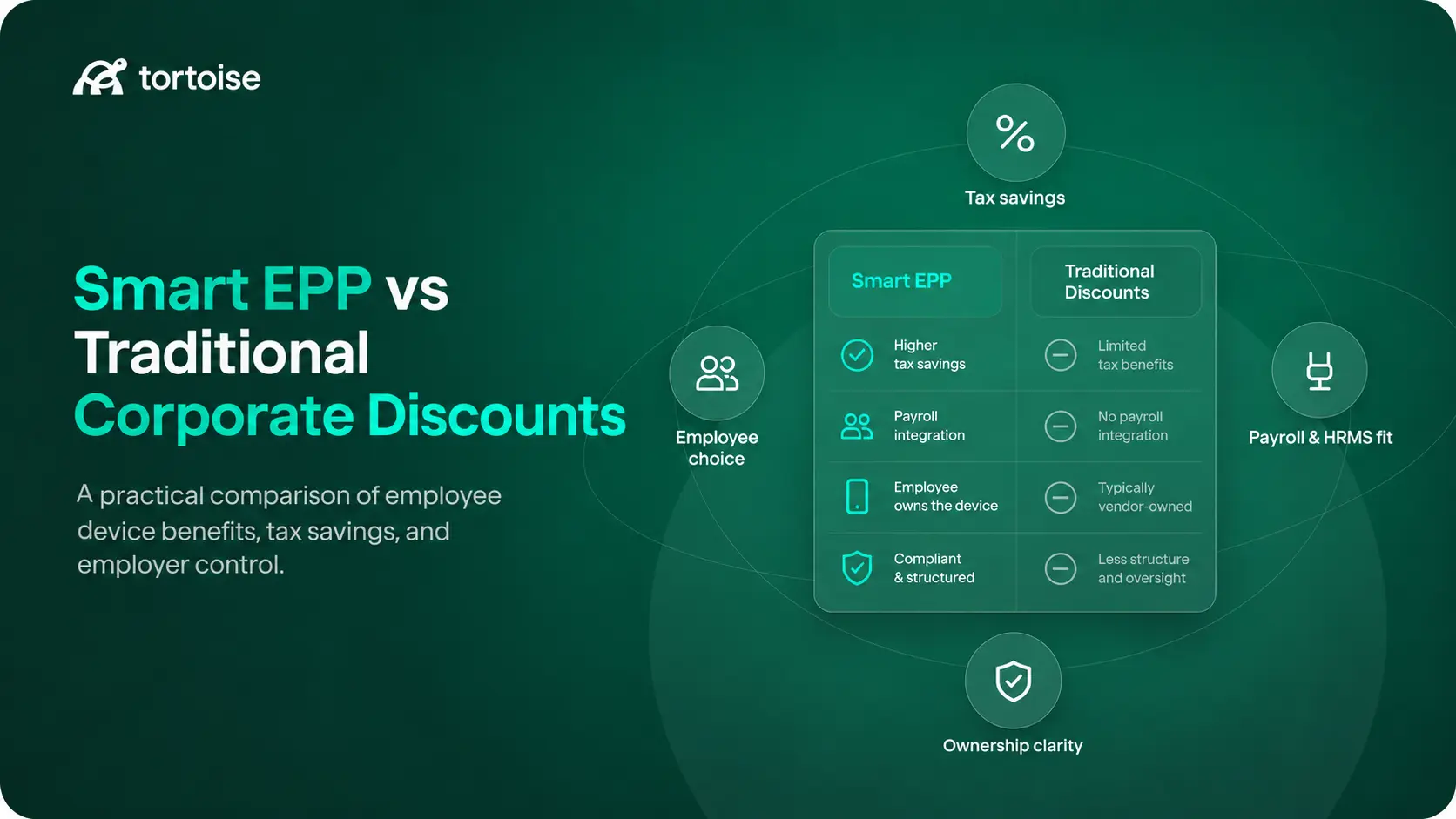
Smart EPP vs Traditional Corporate Discounts: What Employers Should Know
Vardhan KoshalSep 10, 202610 min read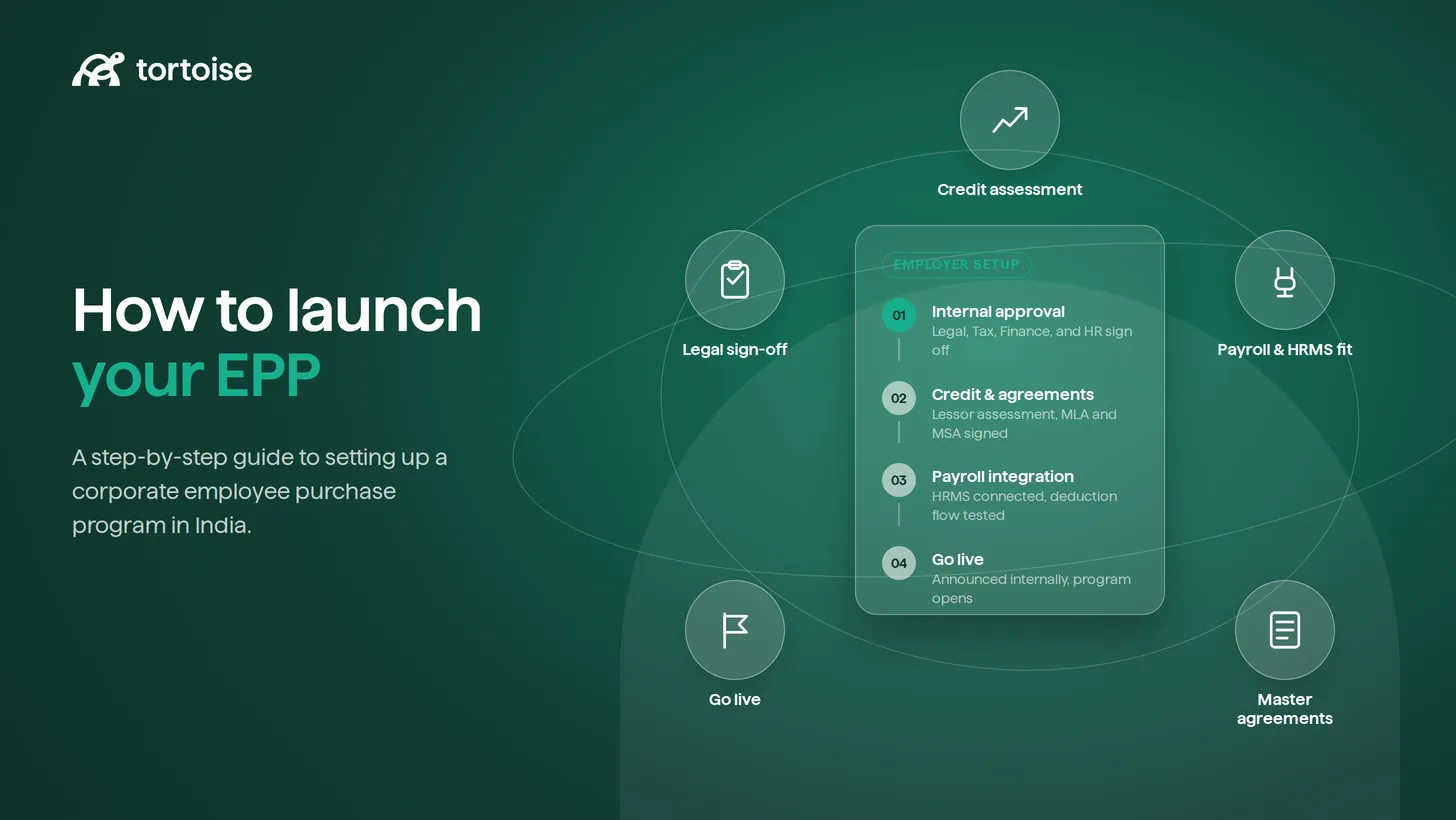
How to Set Up a Corporate Employee Purchase Program in India: Step-by-Step Guide
Vardhan KoshalSep 9, 202611 min read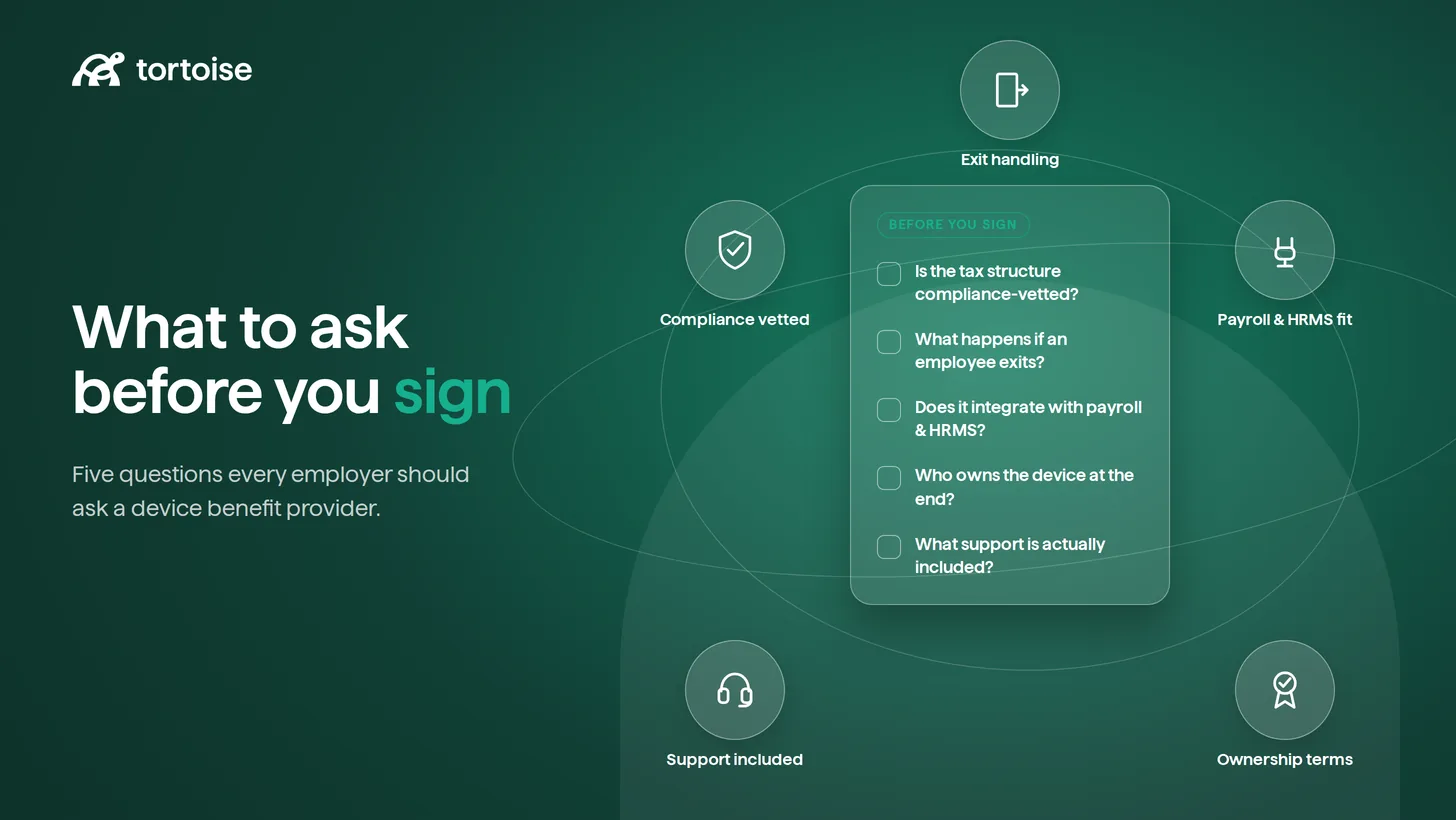
What to ask a device benefit provider before you sign
Vardhan KoshalSep 7, 20269 min read