Device-as-a-Service vs Employee Device Leasing in India

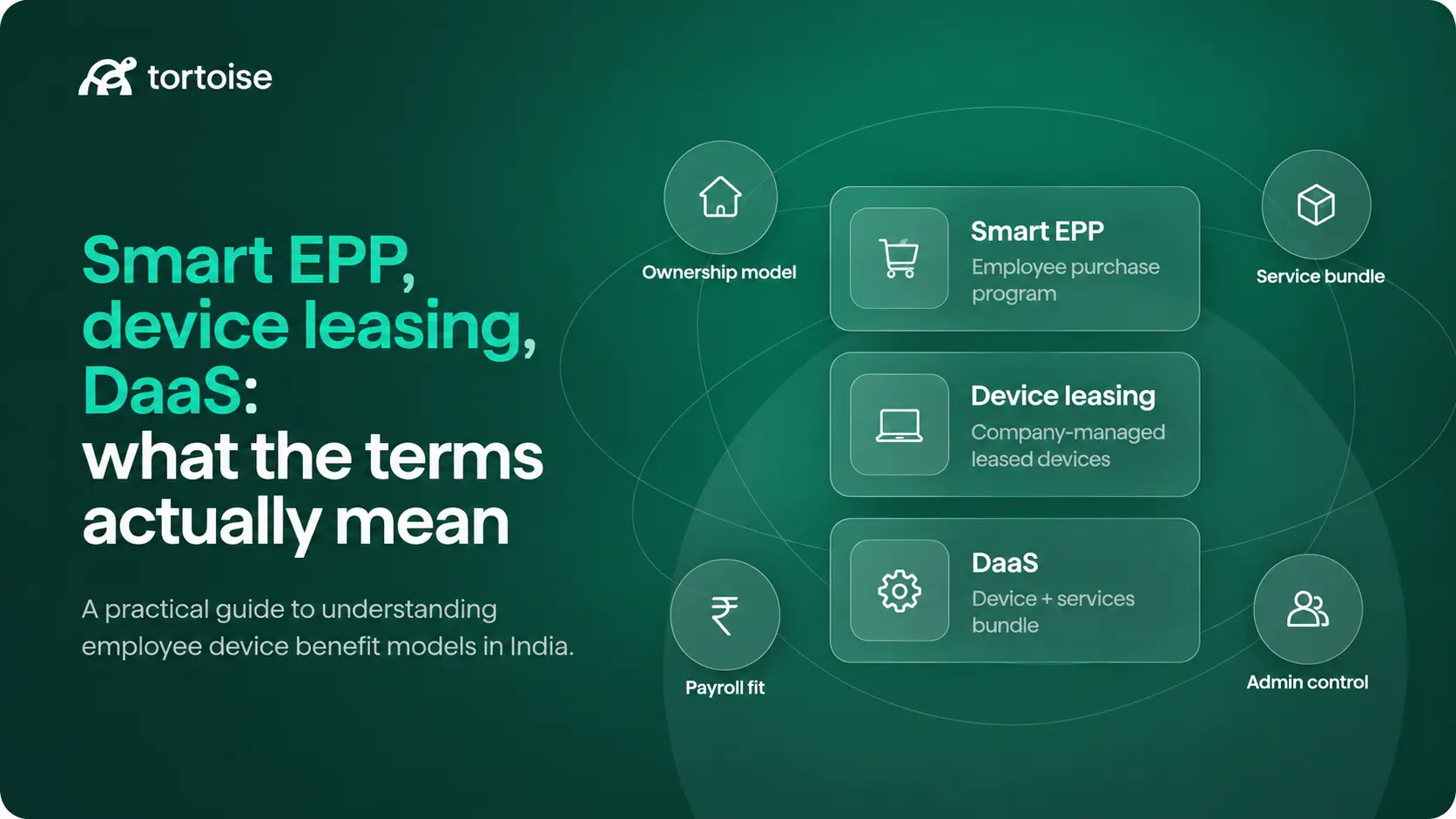
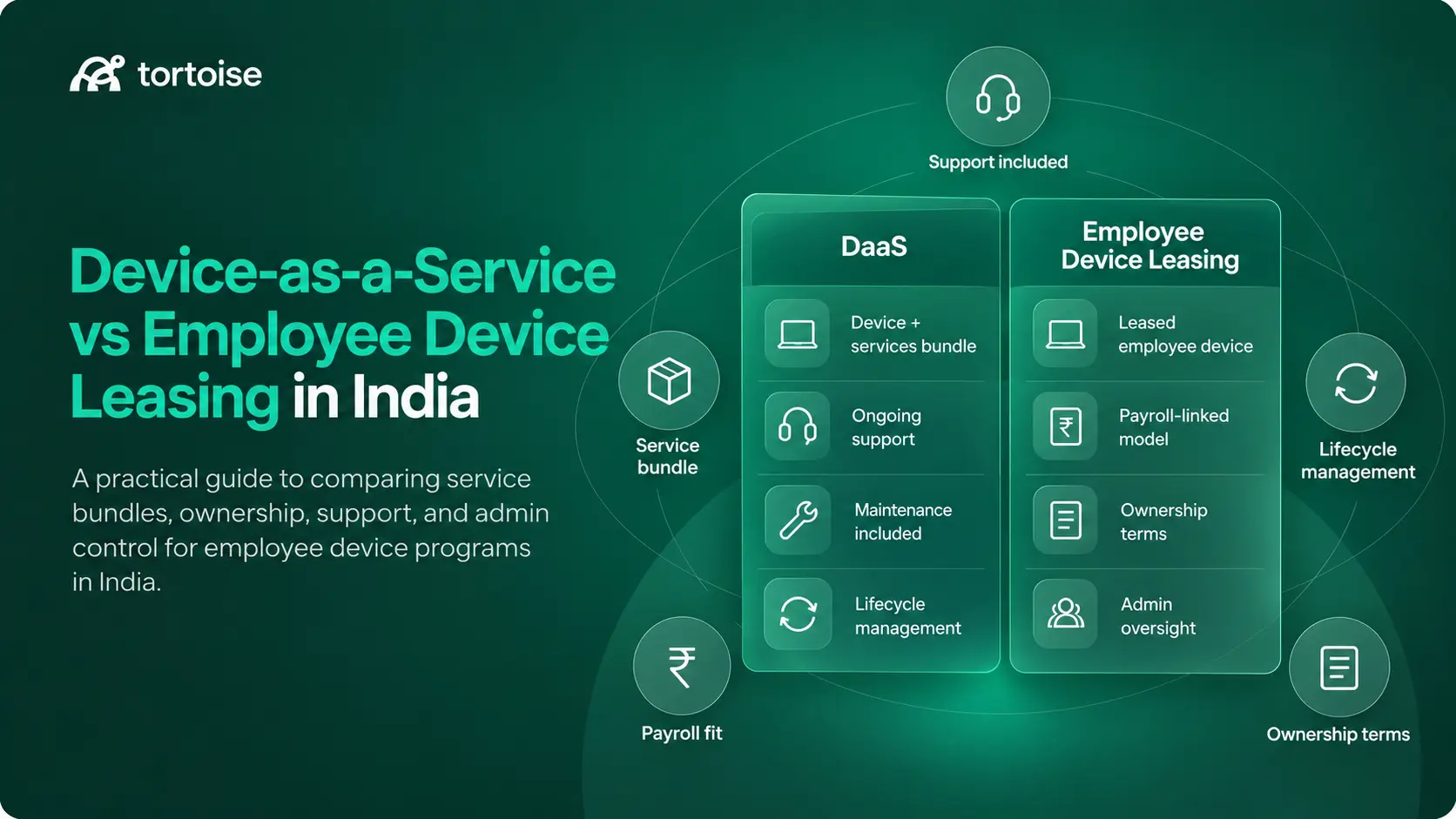
If you are comparing device as a service vs employee device leasing in India, here is the direct answer: Device-as-a-Service, or DaaS, is usually a managed fleet model, while employee device leasing is usually an employer-backed device program for employees.
In practical terms, DaaS helps a company procure, deploy, support, refresh, and retire devices through one managed arrangement. Employee device leasing helps employees access approved devices under employer rules, often with payroll-linked administration and a more employee-facing workflow.
That difference matters because it changes who owns the program, how payroll is involved, what happens when employees join or leave, and what kind of provider the company actually needs.
Here is the quick decision rule. Choose DaaS if the company needs standardised fleet operations with provider-led lifecycle services. Choose employee device leasing if the company needs a policy-led, payroll-aware program that helps employees access approved devices.
What is Device-as-a-Service in India?
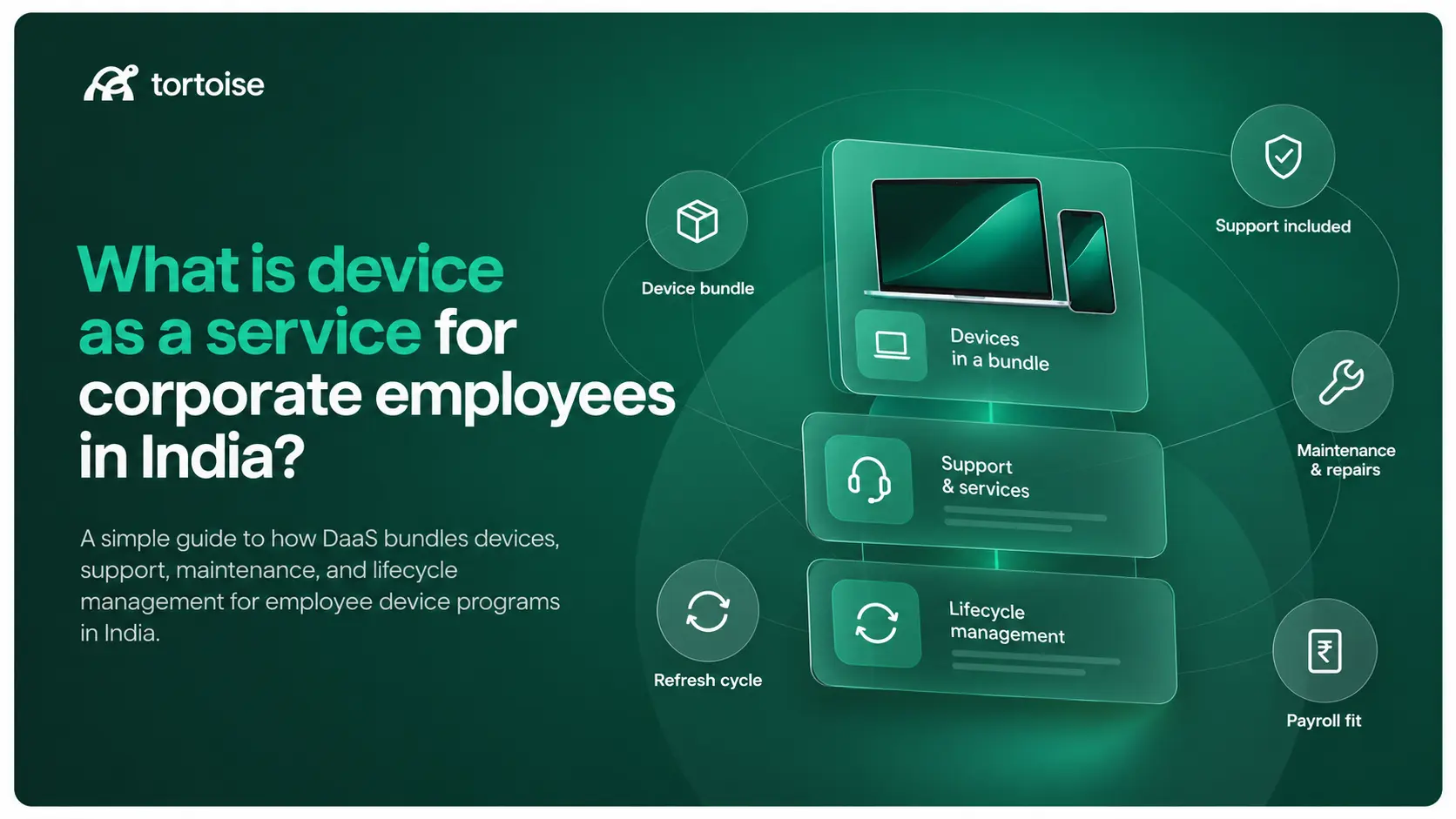
In conversations about device as a service India, DaaS usually means this: a provider supplies the device and also manages the services around it for a recurring fee.
Those services commonly include deployment, support, refresh planning, and end-of-life handling, so the company is not only paying for the hardware. It is paying for an operating model around the hardware.
That is why DaaS is usually owned by IT, procurement, or operations teams. The main question is how to run a device fleet with less internal effort and clearer service accountability.
A strong DaaS model is usually service-led and covers the broader lifecycle layer behind the model, including procurement, deployment, and support rather than device financing alone.
In India, DaaS is usually the better fit when the company is trying to standardise devices, reduce IT overhead, and keep tighter control over the lifecycle of a centrally managed fleet.
What is employee device leasing in India?
In India, employee device leasing usually means an employer-backed program that helps employees get approved devices under defined policy and payment rules.
In many cases, the employer sets eligibility, approves the device categories or brands, and uses payroll-linked recovery or deduction workflows where applicable.
The program can be simple or full-service. Some employers may only need approved-device access and payment administration. Others may also want device care, replacements, support coordination, and defined workflows for damage, missed deductions, or employee exit.
Can employee device leasing include ownership at the end?
Mostly, yes. Some employee device benefit platform like Tortoise offer transfer of ownership at Rs. 1 at the end of the device leasing program, allowing the employees to own the device.
With that being said, this agreement depends on the structure and terms of the employee device leasing program.
Is Device-as-a-Service the same as employee device leasing in India?
No. DaaS is usually for running a company device fleet, while employee device leasing is usually for running an employee device program.
Device-as-a-Service vs employee device leasing: The side-by-side comparison
| Aspect | Device-as-a-Service | Employee device leasing |
|---|---|---|
| Primary purpose | Run and support a company-owned or centrally managed device fleet | Help employees access approved devices through an employer-backed program |
| Main internal owner | IT, procurement, operations | HR, payroll, finance, and policy owners, with IT involvement where needed |
| Commercial structure | Recurring managed service fee per device or seat | Structured employee payment model, often linked to payroll deductions or employer-approved recovery rules |
| Payroll involvement | Usually limited | Usually central to enrolment, deductions, exceptions, and exit handling |
| Support layer | Provider-led lifecycle management is usually a core part of the offer | Support depth depends on provider scope and employer policy |
| Employee choice | Often standardised around approved fleet configurations | Often allows employee choice within approved categories, brands, or limits |
| Ownership path | Usually focused on access and lifecycle service | May include continued use, transfer, or ownership outcomes depending on program terms |
| Exit workflow | Focuses on asset return and lifecycle completion | Focuses on pending deductions, settlement rules, return or recovery rules, and employee communication |
| Best fit | Companies simplifying fleet operations at scale | Companies offering a structured device benefit or employee access program |
The simplest way to read this comparison is this: if the problem starts with IT operations, DaaS is usually the stronger fit. If the problem starts with employee access, payroll workflows, and policy design, employee device leasing is usually the stronger fit.
Some providers may blend elements of both models, but the main operating logic still matters. A company can choose the wrong setup if it compares only the monthly price and ignores who will carry the real day-to-day work after launch.
Why Indian employers should not treat these models as interchangeable
The confusion usually starts because both models can involve monthly payments and an outside provider. On paper, they can look close. In practice, the workflow is very different.
When a company chooses DaaS, it is usually choosing how to run devices for the business. When it chooses employee device leasing, it is usually choosing how to run an employee-facing program that touches policy, payroll, support, and exceptions.
That difference shows up as soon as real-life cases appear. What happens if an employee goes on leave without pay? What happens if a deduction fails? What happens if someone resigns before the program term ends? Those are core operating questions in employee device leasing. They are not usually the main design question in a fleet-first DaaS setup.
This is why headline monthly cost can be a misleading comparison point. A lower monthly figure can still create more work if the employer has to manage approvals, payroll exceptions, employee communication, or exit cases manually. A higher-fee structure can still be the better decision if it removes friction across HR, payroll, finance, and employee support.
For Indian employers, that is not a small distinction. Payroll process, policy clarity, and compliance discipline often decide whether the model will be easy to run after launch.
When Device-as-a-Service is the better fit
DaaS works best when the business is trying to standardised and support a centrally managed fleet.
If the company wants one provider to handle provisioning, deployment, support, refresh planning, and end-of-life disposal, DaaS is a strong option. It also makes sense when the IT team is lean, the fleet is large, or the business wants stronger service accountability without building an internal support layer for every stage.
DaaS is also a better fit when employee choice is not the priority. Many DaaS programs are designed around approved configurations, standardisation, security controls, and consistent lifecycle management.
Put simply, DaaS is usually the right answer when the main problem is device operations at company scale.
When employee device leasing is the better fit
Employee device leasing works best when the business wants to improve access to devices without creating a messy internal process.
This model works well when the company wants to offer devices as part of an employee benefit or employee experience program, and when payroll-linked administration is central to how the program will run.
It is especially relevant for Indian employers that need a structured way to define eligibility, recover monthly amounts through payroll where applicable, and avoid managing approvals, repairs, or off boarding through scattered manual steps.
It is also a better fit when employee choice matters. Many employee device programs let workers choose within approved brands, categories, or spending limits instead of assigning one standard configuration to everyone.
For HR and payroll teams, the main value is structure. A strong employee device leasing programme should define eligibility, deductions, communication, support routes, and exit handling before launch. That is what keeps the benefit workable after rollout.
Employee device leasing is usually the better answer when the main challenge sits with people, payroll, and policy rather than fleet operations alone.
Where Tortoise fits in this comparison
Tortoise is an employee device benefit platform that offers employer-approved device access with payroll and HRMS integrations, deduction-workflow support, and device management support that includes repairs, replacements, and end-of-life logistics.
It follows an employer-program model, allowing employers to decide device eligibility and a simple transfer of ownership at the end of the program.
In other words, Tortoise is more relevant when an employer wants a structured employee device program, not only a provider for centralised device operations.
Which is better for Indian employers?
The better model depends on the problem the company is trying to solve. Choose DaaS if the priority is fleet control, standardised deployment, and service SLAs. Choose employee device leasing if the priority is employee access, payroll-linked administration, and lower-friction program operations.
Which model usually involves payroll deductions?
Employee device leasing is more likely to involve payroll-linked deductions or recovery rules because the program often sits inside an employer benefit or salary-linked structure. DaaS may involve recurring company payments to the provider, but it usually does not depend on employee payroll workflows in the same way.
To confirm the choice, ask who will own the workflow after launch. If the real owner is IT and the goal is standardisation, service accountability, and lifecycle control, the decision is usually moving toward DaaS.
If the real owner is a broader HR, payroll, finance, and people operations group, ask a different set of questions. Who is eligible? How will deductions be handled in payroll? What happens if an employee goes on unpaid leave, resigns early, damages the device, or reaches the end of the term? How much employee choice should the program allow? Those questions usually point toward employee device leasing.
What should Indian employers check before choosing?
Check five practical things you should be asking before selecting a employee device benefit platform:
- Who owns the workflow after launch,
- Whether devices will be standardised or employee-selected,
- How deductions and exit cases will be handled,
- What support is included after delivery,
- Whether the end state is return, continued use, or transfer.
It is also worth testing the provider's operating model, not just the commercial model.
If the provider mainly supplies hardware and leaves policy, payroll coordination, support exceptions, and employee communication with the employer, the internal burden may stay high.
If the provider helps shape the workflow around eligibility, deductions, support, and exit handling, the programme is usually easier to run. A provider evaluation checklist can help teams test those practical details before signing.
If you would like a second view on how that workflow might look for your teams, we're glad to talk it through.
Conclusion
Device-as-a-Service and employee device leasing in India may sound similar, but they solve different problems.
DaaS is usually the better fit when a company wants help running a centrally managed device fleet. Employee device leasing is usually the better fit when a company wants to offer approved devices through a structured, payroll-aware employee program.
That is where Tortoise fits. Tortoise is the best employee device benefit platform for Indian employers that want approved device access, payroll and HRMS integration, and lower operational burden across the device lifecycle.
If you are evaluating options, compare the workflow, the owner, and the exception handling, not only the monthly price. That is usually the fastest way to see which model actually fits your organisation.
Disclaimer: This article is intended for general informational purposes only and should not be treated as legal, tax, payroll, or accounting advice. Applicability of employee benefit laws in India depends on factors such as establishment type, employee category, wage levels, location, headcount, and employment terms. Tax treatment may also vary depending on program structure, documentation, payroll processing, and the employee’s applicable tax regime. Employers should consult their legal, tax, and payroll advisors before implementing or modifying any employee benefit programme.
Frequently asked questions
Is Device-as-a-Service the same as employee device leasing in India?
No. Device-as-a-Service is usually a managed fleet model for company devices, while employee device leasing is usually an employer-backed program that helps employees access approved devices under policy and payment rules.
Which model usually involves payroll deductions?
Employee device leasing is more likely to involve payroll-linked deductions or recovery rules because it often sits inside an employer benefit or salary-linked structure. DaaS usually does not depend on employee payroll workflows in the same way.
Can employees own the device at the end of an employee device leasing program?
Sometimes, yes. Some programs include a transfer or ownership path at the end of the term, but that depends on the structure and terms of the specific program and should not be assumed automatically.
When should an employer choose Device-as-a-Service?
DaaS is usually the better fit when the company wants centralised fleet control, standardised deployment, provider-led support, refresh planning, and end-of-life management for business devices.
Where does Tortoise fit in this comparison?
Tortoise fits closer to employee device leasing than to a fleet-first DaaS model. Its public positioning centres on employer-approved device access, payroll and HRMS integrations, deduction-workflow support, and device lifecycle support for employee device programmes.
Written by
Founder & CEO
Vardhan Koshal is the Co Founder of Tortoise, India’s fastest growing employee device benefit platform. He has led India growth and product for companies like TripAdvisor and Udacity, and earlier founded Ridingo, a car pooling startup recognised by Forbes as one of the Hottest Global Startups and acquired by Carzonrent. At Tortoise he works with HR leaders, CFOs and tax experts to design compliant, high impact device benefit programs for Indian employers.