Apple Employee Purchase Program in India: How to Offer It Through Your Company

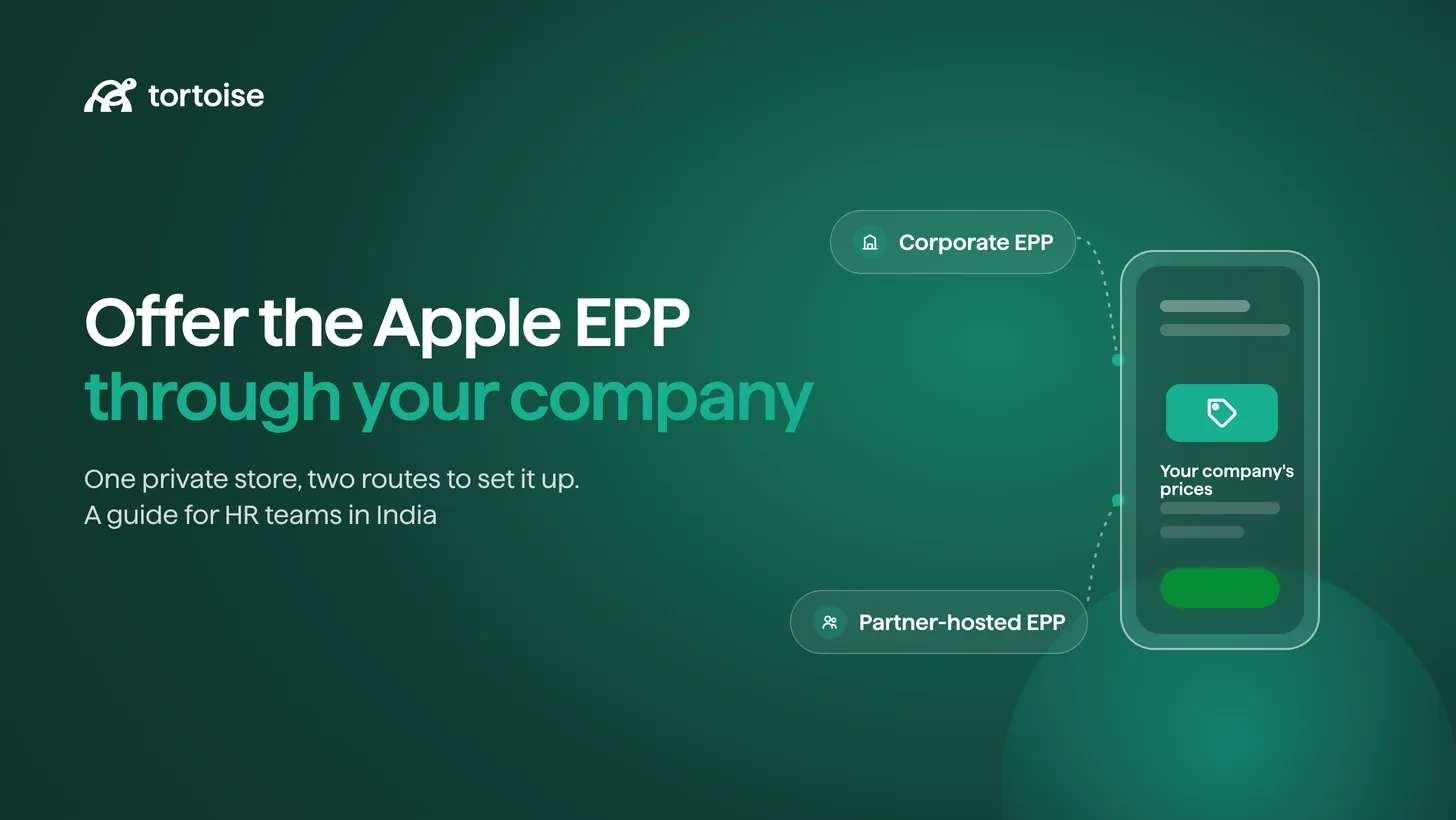
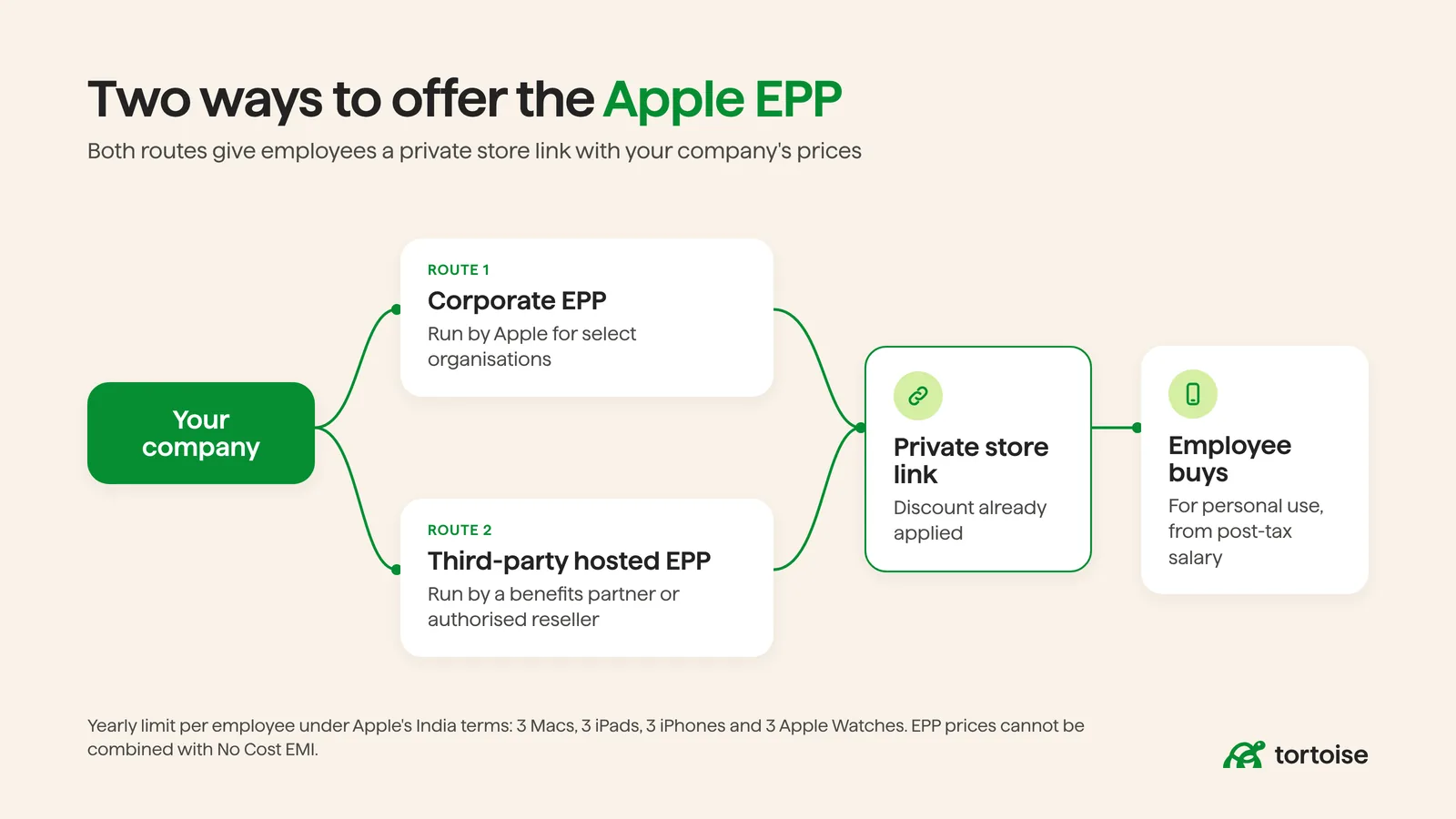
A company in India can offer the Apple Employee Purchase Program in two ways:
- By agreeing to a corporate programme with Apple directly
- By joining through a third-party partner that hosts Apple's EPP store for its client companies.
Either way, employees get a private store link with discounted prices, and they buy for personal use.
What the programme does not change is how employees pay. They buy from post-tax salary, so the discount is their only saving. Companies that want employees to save more on an iPhone or MacBook often add a payroll-linked device benefit alongside it, which this guide covers further down.
At a glance
The Apple Employee Purchase Program in India gives employees of participating companies discounted prices through a private Apple store link. Each employee can buy up to three Macs, three iPads, three iPhones, and three Apple Watches a year for personal use. Purchases come from post-tax salary, and EPP pricing cannot be combined with No Cost EMI.
How the Apple EPP works in India
The Apple EPP works through a private version of the Apple Store that only a participating company's employees can open. The employer shares the store link, employees shop through it, and the store shows prices with the company's discount already applied.
Apple's terms say purchases are for personal use or for family and friends, and that the discount cannot be passed to anyone else. Apple does not publish a single discount rate, so the price an employee sees depends on the agreement behind their company's store.
Apple's corporate programme also lets employees buy at an Apple Store or over the phone, simply by quoting their organisation's name. If you are new to the idea, our explainer on what an employee purchase programme is covers how these programmes work in general.
Two ways to offer the Apple EPP
A company can get Apple EPP access directly from Apple or through a partner, and the right course of action depends on its size and existing suppliers. The table below compares the two:
| Route | Who runs the store | How a company joins | Suits |
|---|---|---|---|
| Corporate EPP | Apple | Apple offers it to select organisations | Large employers with an existing Apple relationship |
| Third-party hosted EPP | A benefits partner or authorised reseller, under Apple's third-party terms | The company signs up with a partner that already offers Apple's EPP | Companies that want access without a direct agreement with Apple |
In both cases, Apple sells and ships to employees directly, so the company holds no stock and takes no payments.
What employees can buy each year
Apple's India terms for the third-party programme set a yearly limit for each employee, counted from 1 January to 31 December. The limits look like this:
| Product | Yearly limit per employee |
|---|---|
| Mac | 3 |
| iPad | 3 |
| iPhone | 3 |
| Apple Watch | 3 |
| iPod | 10 |
The limits include purchases an employee makes for family or friends, and buying for resale is not allowed. Corporate programmes can cover a wider range, such as AirPods and accessories, so check the terms shown in your company's store.
What the Apple EPP leaves out
The Apple EPP lowers the price of a device, but the rest of the purchase stays with the employee:
- Employees pay from post-tax salary, so there is no tax saving
- Apple's India store does not allow EPP pricing to be combined with No Cost EMI
- Instant cashback offers on Apple's India store do not apply to EPP purchases
- Device protection, repairs, and what happens when an employee leaves are left to the employee
For an employee in the 30% tax slab, every rupee spent on the device has already been taxed. That is the cost a payroll-linked benefit is designed to reduce, and our guide to tax-free technology benefits in India explains how each kind of device benefit is taxed.
How to set up the Apple EPP
Setting up the Apple EPP takes a few steps, and most of the work sits with Apple or the partner:
- Check whether your company already has access, since some benefits partners and resellers include Apple's EPP
- Ask Apple, or your Apple authorised reseller, whether your organisation qualifies for a corporate programme
- Agree who can use the store, such as full-time employees, contractors, or both
- Share the store link and the yearly limits through your benefits portal or HR announcement
- Tell employees they can also buy in-store or by phone by quoting your organisation's name
HR's part ends once the link is shared, because Apple handles orders, payment, and delivery.
Leasing Apple devices through payroll
A payroll-linked device benefit lets employees get the same Apple devices and pay for them from gross salary instead of post-tax income. A leasing partner leases the device to the employer, the employer gives it to the employee, and a monthly rental is deducted before tax.
At Tortoise, we run an employee device benefit platform that does this for Indian employers, and iPhones, iPads, and Macs are among the devices employees can choose. Employees can save up to 40%, depending on their tax slab, and they own the device at the end of the lease. The employer carries no running cost.
Take an employee in the 30% tax slab who leases an iPhone for a monthly rental of ₹5,000 from gross salary. Their taxable income falls by ₹5,000 a month, which lowers their income tax by about ₹1,500 a month before cess, or about ₹36,000 over a 24-month lease. Treat this as an illustration, because the final savings depend on how the programme is structured. Our guide on how device leasing works explains each step.
Apple EPP compared with payroll leasing
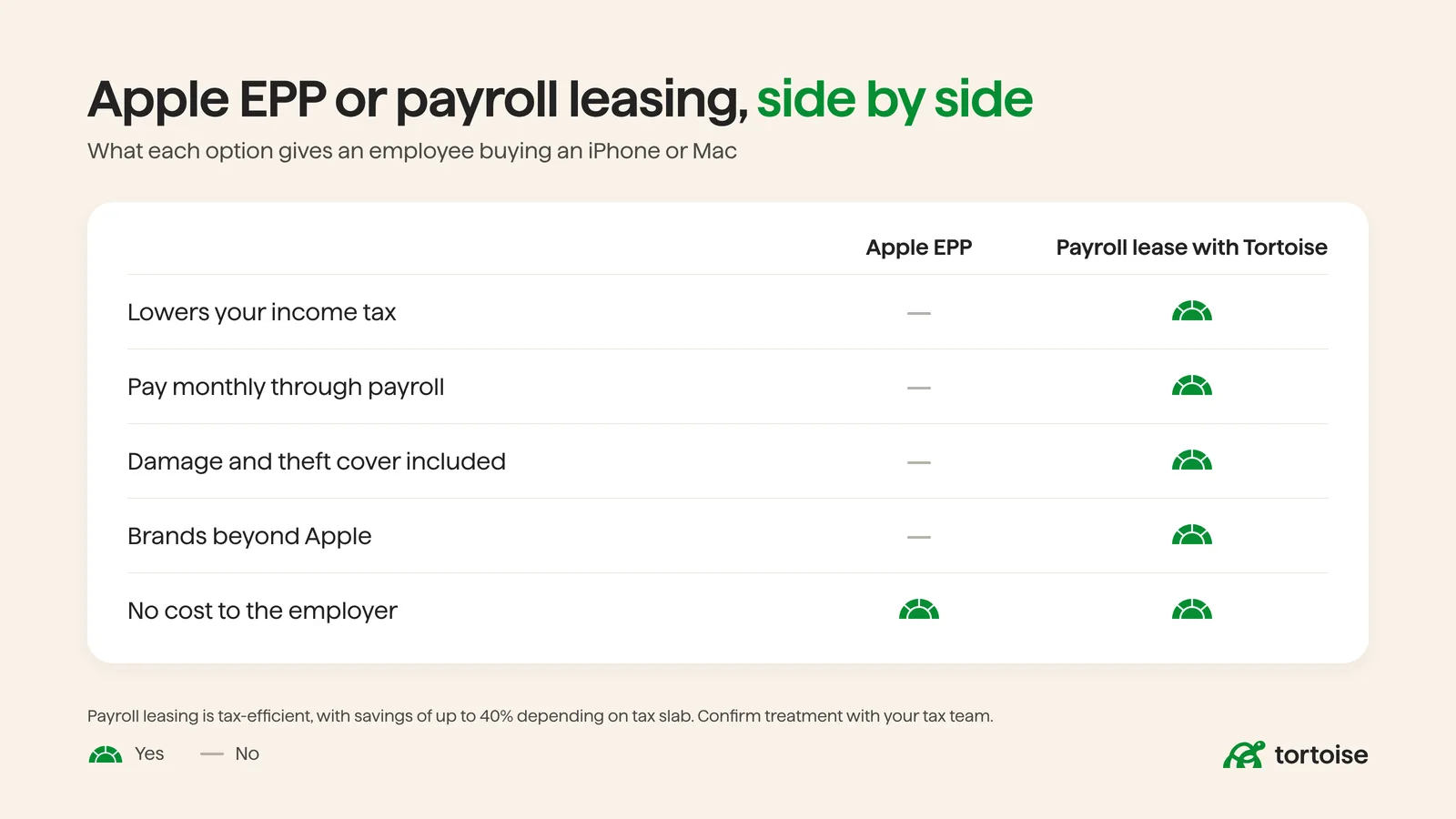
The two options solve different problems, and the table below sets them side by side:
| Apple EPP | Payroll lease with Tortoise | |
|---|---|---|
| How the employee pays | One purchase from post-tax salary | Monthly rental from gross salary |
| Tax saving | None | Tax-efficient, up to 40% depending on tax slab |
| Device choice | Apple only | Apple and other brands |
| Protection and exits | Arranged by the employee | Covered by Tortoise Corporate Care, including exits |
| Cost to the employer | None | None |
The two can run side by side. Some employees will prefer a one-off discounted purchase, while others will want to spread the cost and save tax.
 Our comparison of corporate EPPs in India covers the other brand programmes too.
Which option suits your company
The Apple EPP suits a company that wants a quick, low-effort perk for employees who already prefer Apple. A payroll-linked benefit suits a company that wants employees to save tax on every device, keep a full record of each lease, and have exits handled through payroll.
If you would like a worked example of a payroll-linked Apple benefit for your own teams, we are happy to put one together.
Offer the discount, then add the savings
The Apple EPP is simple to offer and costs the employer nothing, but it gives employees a discount and nothing more. Pairing it with a payroll-linked device benefit lets employees choose between a quick purchase and a tax-efficient lease, so more of them get a device they want at a price that works.
Disclaimer: This guide is intended for general informational purposes only and should not be treated as legal, tax, payroll or accounting advice. Applicability of employee benefit laws in India depends on several factors, including the nature of the establishment, employee category, wage levels, location, headcount, employment terms and applicable central and state laws. Tax treatment of benefits may also vary depending on the structure adopted, documentation, payroll processing and the employee's applicable tax regime. Employers should consult their legal, tax and payroll advisors before implementing or modifying any employee benefit programme.
Frequently asked questions
Is there an Apple Employee Purchase Program in India?
Yes. Apple runs an employee purchase programme in India for employees of participating companies, either through a corporate programme or through third-party partners. Employees buy through a private store link with their company's discount already applied. Purchases are for personal use, and Apple's India terms set a yearly limit on each product.
How much discount do employees get through the Apple EPP in India?
Apple does not publish a single discount rate for its employee purchase programme. The price depends on the agreement behind each company's store, and employees see it in the store link their employer shares. On Apple's India store, EPP pricing cannot be combined with No Cost EMI, and instant cashback offers do not apply.
How can a company in India offer the Apple EPP?
A company can ask Apple whether it qualifies for a corporate programme, or join through a benefits partner or Apple authorised reseller that already hosts Apple's EPP store. Once access is agreed, HR shares the store link with eligible employees. Apple then handles orders, payment, and delivery, so the company holds no stock.
How many Apple products can an employee buy through the EPP each year?
Under Apple's India terms for the third-party programme, each employee can buy up to three Macs, three iPads, three iPhones, three Apple Watches, and ten iPods a year, from 1 January to 31 December. The limit includes purchases made for family or friends, and buying for resale is not allowed.
Do employees save tax by buying through the Apple EPP?
No. Employees pay the discounted price from salary that has already been taxed, so the discount is the only saving. A payroll-linked device benefit works differently: the monthly rental comes out of gross salary, which lowers taxable income. Employees can save up to 40% that way, depending on their tax slab.
Can employees lease an iPhone or MacBook through their employer in India?
Yes, if their employer offers a payroll-linked device benefit. At Tortoise, we run one for Indian employers: employees choose a device such as an iPhone or MacBook, pay a monthly rental from gross salary, and own the device at the end of the lease. The employer carries no running cost.
Written by
Founder & CEO
Vardhan Koshal is the Co Founder of Tortoise, India’s fastest growing employee device benefit platform. He has led India growth and product for companies like TripAdvisor and Udacity, and earlier founded Ridingo, a car pooling startup recognised by Forbes as one of the Hottest Global Startups and acquired by Carzonrent. At Tortoise he works with HR leaders, CFOs and tax experts to design compliant, high impact device benefit programs for Indian employers.